Hormone Related Hair Loss: Causes, Symptoms & Treatment | Uroots
Reviewed by QHT Clinic
Know Your Hair Fall Before It Worsens
Identify early hairfall signs with personalised expert-backed recovery guidance.
Hormone Related Hair Loss
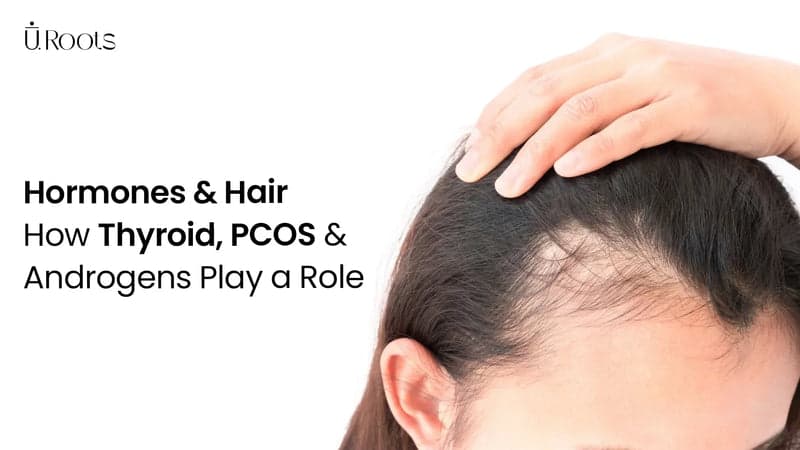
Losing hair through thinning or patches, can be incredibly discouraging. Hair thinning/shedding or patchy areas of loss are often associated with hormone imbalances. Factors such as thyroid dysfunction, androgen excess and PCOS can impact hair follicle cycles reducing hair growth and causing continued hair thinning over time.
At Uroots by QHT Clinic , our team of hair specialists assesses hair loss related to hormone imbalances through advanced scalp analysis, hormone profile blood testing and formulation of a personalized treatment plan. We recognise that every hormone imbalance results in the manifestation of a different hair condition with different patterns, densities and textures of hair.
Intervening early may help prevent damage to the follicle, and promote healing of the hair follicles so that they can grow again. This blog will discuss how disorders of the thyroid gland (hypothyroidism as well as hyperthyroidism), PCOS (polycystic ovary syndrome), and sensitivity to androgens affect the health of hair; identify the symptoms that may indicate a problem; and present evidence-based strategies for improving hair health.
Common for women with conditions associated with PCOS or hypothyroidism.
Androgen sensitivity levels may influence the extent of hair loss.
Hair loss is usually diffuse throughout the scalp, although it can also be characterized by localized, patterned areas of thinning.
Medical treatment can often be effective when initiated early
Table of Contents
Understanding Hormone Related Hair Loss
How Thyroid Hormones Affect Hair Growth
PCOS Hair Thinning – Mechanisms and Symptoms
Androgens and Hair Follicle Sensitivity
Early Symptoms and Progression
Risk Factors That Worsen Hormone Related Hair Loss
Mid-Content Consultation Guidance
How to Stop Hair Fall Based on the Root Cause
Myths About Hair Fall Treatment
Frequently Asked Questions
Understanding Hormone Related Hair Loss
Hair follicles are extremely sensitive to hormones responsible for regulating growth cycle, stem cell activity and follicle health. Disruption to the balance of these hormones through thyroid disorders, polycystic ovarian syndrome (PCOS), and excess androgen production will cause hair follicles to enter the resting phase too early, experience a decrease in shaft diameter, and have increased shedding. The appearance of hormonal hair loss can be generalized throughout the scalp or can follow specific patterns of thinning, depending on the type of hormonal imbalance.
Many women often experience hormonal hair loss due to cyclical hormonal fluctuations, metabolic disorders and conditions such as PCOS. Men tend to experience follicular miniaturization due to increase in androgen levels, which increases the severity of male pattern baldness. A solid understanding of how hormones affect hair follicles can help in taking early intervention steps and prevent hair loss.
How Thyroid Hormones Affect Hair Growth?
Thyroid hormones control metabolism, production of protein, and cellular regeneration. These three processes are important for the functioning of hair follicles.
A lack of thyroid hormone (Hypothyroidism) or excess of thyroid hormone (Hyperthyroidism) can lead to diffuse shedding of hair, reduced hair density, and slowed regrowth.
Hypothyroidism: Hair becomes thick, dull, and brittle. Hair follicles enter an extended stage of resting, which results in the diffuse thinning of the hair follicles.
Hyperthyroidism: Hair becomes fine and soft with rapid shedding all over the scalp.
Thyroid-hair loss is associated with other symptoms, including extreme fatigue, skin changes, and brittle nails. Treating imbalances in thyroid levels provides a basis for hair-root recovery.
PCOS Hair Thinning – Mechanisms and Symptoms
PCOS affects insulin levels, androgen levels, and causes thinning and miniaturization of hair. Increased androgen levels bind to sensitive follicles, speed up the miniaturization process and shorten the growth phase.
Symptoms of hair loss due to PCOS include:
Generalized thinning on top of the head and around the hairline
Less volume in the ponytail
Thinner or brittler hair shafts
Greater amounts of shedding when under stress or with hormonal fluctuations
Follicles are more sensitive when impacted by lifestyle factors, insulin resistance, and obesity. Early intervention, developing a healthy lifestyle along with appropriate medical treatment can improve the possibility of regrowth.
Androgens and Hair Follicle Sensitivity
Follicle size, growth cycle and density will be affected by androgens like testosterone and DHT. Follicles that are genetically sensitive to DHT may progressively miniaturize resulting in patterned hair loss for both genders.
Women will likely experience frontal thinning of their hair or wider part lines when they exhibit androgen excess.
While males are generally more prone to having receding hairlines on the forehead or male pattern baldness on top.
Treatment includes reducing the effects of DHT on hair follicles with drug therapies and regenerative methods if appropriate.
Early Symptoms and Progression
The early warning signals of hair loss include excessive shedding onto pillows and brushes, as well as down the drain when showering, decrease in the density of hair, and hair becoming more fragile, and weak.
Women who experience diffuse thinning or a widening of the hair part line associated with PCOS or thyroid hair loss tend to experience gradual worsening of the symptoms over a period of months in the absence of early intervention. While men usually experience a recession of their hairline first and then a loss of hair in the crown area. An early diagnosis of hair loss may result in the avoidance of long-term irreversible hair miniaturization and improve the efficacy of future hair restoration treatments.
Risk Factors That Worsen Hormone Related Hair Loss
Nutritional Deficiency: Nutritional deficits such as low levels of protein, iron, zinc and Vitamin D as well as B Complex will impair keratin production and weaken hair follicles. These nutrient deficiencies in addition to hormone imbalance will increase hair shedding and delay hair regrowth.
Sleep Deprivation: Sleeping less will disrupt the natural rhythmic (Circadian) pattern of cortisol and growth hormone release; therefore decreasing the ability of hair follicles to regenerate themselves and inhibit hair growth.
Hormonal Imbalances: Thyroid disorders, Polycystic Ovarian Syndrome (PCOS), or insulin resistance can cause hair follicles to remain in the resting phase for a longer period, which can increase the risk of hair thinning.
Lifestyle Habits: Smoking, stress, crash dieting, and dehydration will lead to hair follicle miniaturization and decrease the effectiveness of treatments.
People experiencing hormonal imbalance (thinning hair, and excessive shedding) should seek medical attention early for evaluation.
Uroots By QHT offers personalized assessments and targeted treatment programs that will help to restore hair density to the scalp safely.
How to Stop Hair Fall Based on the Root Cause?
To treat hair fall efficiently, a multi-faceted approach that includes hormone balancing, follicle preservation, and lifestyle adjusting would be ideal.
Hormone balancing: Having thyroid, androgen, or insulin imbalances corrected under proper medical supervision.
Nutritional support: Eating enough protein, iron, zinc, vitamin D, and B vitamins will help provide needed nutrients for hair growth and support.
Scalp restoration: There are many treatments available to reduce inflammation, regenerate tissue, and increase microcirculation.
Lifestyle & stress management: Modify your sleep patterns, exercise, drink sufficient amounts of fluid, and practice relaxation techniques.
When all of these methods are consistently applied, they are effective in reducing hair loss and stimulating the reactivation of dormant hair follicles and stimulating hair growth within several months.
Myths About Hair Fall Treatment
Truth: Targeted medical management of the particular hormonal imbalance may reactivate follicles and reduce hair shedding.
Truth: There is a significant chance for hair regrowth with early diagnosis and treatment.
Truth: Lifestyle improvement, improved nutrition, and regenerative options will enhance outcomes.
Truth: The regrowth of hair will take place gradually as the follicles recover from miniaturization.
Frequently Asked Questions
What's causing my hair to fall out every day?
Hormonal changes could affect your follicles growth and cause them to enter the resting state, resulting in a higher daily hair shedding.
Is Hair Loss Reversible?
Hormonal hair loss in the early stages is often reversible with specialized medical treatment and changes in lifestyle and environment.
When should you see a hair specialist?
See a hair specialist after three months of continued hair shedding, if you start to notice significant thinning of your hair, or if you have been diagnosed with a hormone imbalance.
Can PCOS result in thinning hair?
PCOS affects the production of male hormones (androgens) that cause the hair follicles to miniaturize at a faster rate, resulting in diffuse thinning of hair.
How long does it take to see improvement in hair regrowth?
In general, people can expect to see visible signs of improvement within three to six months of beginning treatment, depending on the extent of hormone imbalance correction and the method of stimulating hair regrowth.
Why Choose URoots?
Professional expertise in hair and endocrinology
Advanced diagnostics to determine hormone and scalp health
Evidence-based treatment protocols for medical hair loss
Individualized plan of care for each patient
Honest, open, and ethical consultation
Monitoring and long term follow up
Book your Hair Consultation
Identify your hormonal triggers and restore the density of your hair through the expert-guided, individualized hair loss treatments provided at Uroots By QHT.
Know Your Hair Fall Before It Worsens
Identify early hairfall signs with personalised expert-backed recovery guidance.
Back to blog { "@context": "https://schema.org", "@type": "MedicalWebPage", "@id": "https://theuroots.com/blogs/news/hormonal-hair-loss-causes-treatment#webpage", "url": "https://theuroots.com/blogs/news/hormonal-hair-loss-causes-treatment", "name": "Hormones \u0026 Hair: How Thyroid, PCOS \u0026 Androgens Play a Role", "description": "Hormone-related hair loss is a common yet often misunderstood condition affecting both men and women. Imbalances caused by thyroid disorders, PCOS, insulin resistance, or increased androgen sensitivity can disrupt the...", "isPartOf": { "@type": "WebSite", "@id": "https://theuroots.com#website", "name": "TheUroots", "url": "https://theuroots.com" }, "reviewedBy": { "@type": "Person", "name": "Dr. Ajay, MBBS, QHT Clinic", "jobTitle": "Medical Reviewer", "affiliation": { "@type": "MedicalOrganization", "name": "QHT Clinic", "url": "https://qhtclinic.com/" } }, "author": { "@type": "Organization", "name": "URoots Editorial Team" }, "datePublished": "2026-02-07T16:11:00+0530", "dateModified": "2026-02-07T16:11:10+0530" } Browse
Related Blogs
Discover reliable, doctor-written health resources online for accurate guidance, trusted information, and better informed medical decisions.
15th May 2026 URoots vs Other Hair Loss Brands in India: An Honest Comparison Struggling with hair fall and have tried every...
15th May 2026 How to Use Minoxidil for Maximum Hair Regrowth Results Hair loss does not happen overnight, but once...
15th May 2026 Hair Loss Treatments Compared: Which Option Is Right for You? Hair loss is a very prevalent condition that...
15th May 2026 Post Hair Transplant Medicine: The Complete Guide to Healing & Recovery A hair transplant takes nine to twelve months...
Book Your Consultation
We're always here for hair help.
Shop
Hair Test
Contact
Our Story & Philosophy
Experts Panel
Blogs
Khasara No. 1395/684/2, Crown Complex, NH-8, Exit No. 12, Near Hero Honda Chowk, Gurugram,
+916399110555
care@theuroots.com
Grievance Officer: Mr. Sumit QHT Email: grievance@theuroots.com
Privacy Policy
Payment Terms & Conditions
Cancellation / Refund Policy
Terms & Conditions
Shipping Policy
URoots Hair Serum
URoots Max Cyclical Therapy
URoots Hair Supplement
URoots Daily Hydrating Shampoo
URoots Finasil Tablets
URoots Minoxidil 5% Solution
Uroots Minoxidil 5F+ Daily Scalp
© 2026 QHT Mediways. All Rights Reserved
Choosing a selection results in a full page refresh.
Opens in a new window.
URoots Hair Care Expert × Hi! Welcome to URoots. Before we begin, please share your name and phone number so our team can follow up with you.
✅ Thank You, ! Your responses have been recorded.
Our hair care experts at URoots will review your details and get in touch with you shortly on to guide you on the best path forward.
Typically, our team responds within 24 working hours. We look forward to being part of your hair care journey!
This article is general information, not a diagnosis. Hair loss has several causes and the right treatment depends on yours.
Talk to a doctor