Oral vs Topical Hair Loss Treatment Explained | Theuroots
Reviewed by QHT Clinic
Know Your Hair Fall Before It Worsens
Identify early hairfall signs with personalised expert-backed recovery guidance.
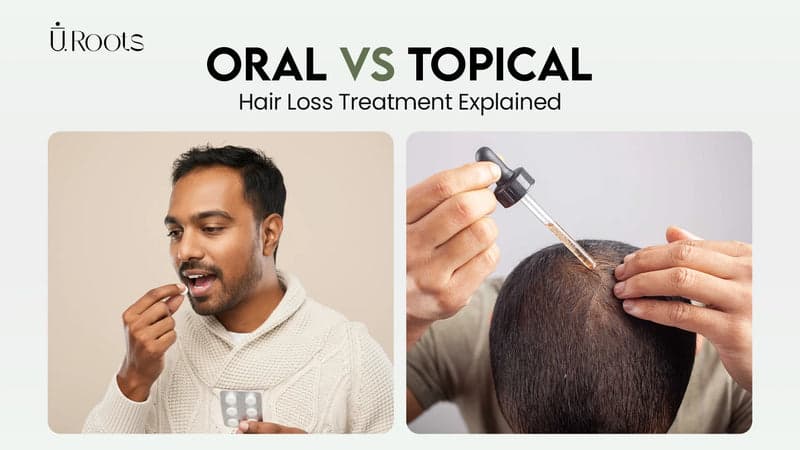
Hair loss is a common issue for millions of individuals around the world. It affects people's confidence, appearance, and emotional well-being. As we move into the future with so many contemporary scientific advancements, the most common question encountered by patients is: should I go for an oral or topical hair-loss treatment?
Both the oral and topical hair-loss treatment options seek to reduce shedding and stimulate hair growth, however they both act and are absorbed in different ways. It is important to understand what both the options are, their pros and cons and which option is best suitable for you.
Let’s talk about the main differences between oral and topical treatment options, and why it is important to get expert guidance from clinics like QHT Clinic.
Understanding Hair Loss and Its Causes
If you're experiencing hair loss, the first step in the hair restoration process is identify what caused it in the first place- such as genetics, hormones, nutritional deficits or stress. Topical treatments, such as Minoxidil, are best used in mild or early hair loss cases with visual improvements in over 3 to 6 months, while oral medications, such as Finasteride or oral Minoxidil work better for hormonal or more advanced hair loss with results visible in over 4 to 8 months. Minoxidil works for both men and women, but Finasteride is typically used for men only. While oral Minoxidil is also effective, it must always be taken under medical supervision due to side effects. Generally, mild types of hair loss typically respond to topical treatments, while advanced or hormonal types of hair loss may respond better to a combination of oral and topical treatments. Medical supervision is important to avoid complications.
It’s important to know why hair loss occurs before considering treatment. Hair thinning or baldness (alopecia) may result from a variety of issues, including:
Genetics (Androgenetic Alopecia): A condition experienced by both men and women, primarily due to the hormone DHT (Dihydrotestosterone), which diminishes the size of hair follicles over time resulting in thinning hair and balding.
Hormonal Changes: Changes related to pregnancy, menopause, thyroid dysfunction, or PCOS can interrupt the hair growth cycle leading to excessive hair shedding or slow hair regrowth.
Nutritional Deficiencies: Hair structure can be compromised by a low intake of macro- and micronutrients such as iron, zinc, vitamin D, or protein, leading to weak and broken hair. A nutritious diet can support regrowth.
Stress and Lifestyle Factors: Long-term chronic stress, lack of sleep, smoking, and poor lifestyle habits can all inhibit hair growth blocking the normal cycle. Consider addressing stress and lifestyle factors in support of scalp health.
Medical Conditions or Medications: Hair loss can also be associated with autoimmune disease or medications (such as blood pressure medications, or antidepressants), which can also cause temporary or permanent hair loss.
What Are Topical Hair Loss Treatments?
Topical hair loss treatments are applied to the scalp to target thinning or areas of baldness from the outside. They are often the first step for people with mild to moderate hair loss. These treatments stimulate the hair follicles, and promote blood flow to the scalp, to facilitate hair growth.
Minoxidil (Rogaine) is the most commonly used topical solution for hair loss that is FDA approved. It is available in 2%, 5%, and 10% concentrations in a liquid, foam, or spray form. It appears to increase blood flow by dilating blood vessels, which allows for greater delivery of nutrients to the hair follicles and even wakes up sleeping follicles. When used daily, Minoxidil can facilitate hair growth resulting in thicker, healthier hair in the long run.
Topical Finasteride, a newer treatment, is an effective option that minimizes systemic side effects at the same time. Topical Finasteride prevents the action of DHT (dihydrotestosterone) hormone and slows down the miniaturization of the hair follicles and promotes regrowth, especially in cases of androgenetic alopecia.
Several clinics and dermatologists also offer treatments in combination with Minoxidil, Finasteride, and Biotin, that are specifically proven to improve results and lead to denser hair growth.
Natural scalp serums containing ingredients like caffeine, rosemary oil, or peptides are also gaining popularity as alternatives to a topical approach. In general, natural scalp serums will enhance blood circulation to the scalp and build follicle strength. Therefore, they are suitable for patients seeking a topical option that is gentle but effective.
What Are Oral Hair Loss Treatments?
Oral hair loss medications are systemic agents that address hormonal, dietary, or genetic causes of hair loss from within the body. As opposed to topical formulations, oral treatments circulate throughout the bloodstream to address the underlying issues of hair loss and promote long-term health.
Finasteride is one of the most widely prescribed oral medications for male pattern baldness. It works by blocking the enzyme 5-alpha-reductase that converts testosterone into DHT, the hormone that reduces the size of hair follicles. Finasteride lowers DHT levels and slows down hair loss at the crown and hairline, and with time new hair growth may be observed.
Oral minoxidil has also gained popularity recently, as it is found as an effective alternative for topical treatments. Oral minoxidil improves not only blood flow to the hair follicles, but also strengthens existing hair strands, leading to observable gains in hair density and texture.
Finally, nutritional supplements like biotin, zinc, iron, and omega-3 fatty acids are also effective in promoting scalp health and hair regrowth. In case of deficiencies, intake of vitamins, minerals and supplements play an important role in developing healthy hair that is strong and resilient.
Oral vs Topical Hair Loss Treatment
Both oral and topical medications help in restoration of hair but they both differ in their approaches and procedure. Some of the key differences include the following:
Topical Treatment
Oral Treatment
Acts directly on scalp follicles
It functions by altering the hormonal activity
It comes in the form of a spray, lotion etc and is absorbed by the skin
Systemically circulates through the bloodstream which affects the whole body
Used in cases of mild to moderate hair loss
Used in cases of high to severe hair loss
The onset of results is by 3 to 6 months
The onset of results is by 4 to 8 months
Best for the early stages of hair thinning
Best for advanced, progressive or hormonal hair loss
Some noticeable side effects includes: dry scalp, shedding of hair
Some noticeable side effects includes: hormonal changes, effects in libido
Topical vs Oral Hair Loss Treatment: Which Is Better For You?
Selecting between oral or topical solutions for treating hair loss is highly dependent on knowing the root cause of hair loss, lifestyle and personal goals of the patient. Both treatment solutions are effective but they work in different manners.
Topicals like Minoxidil or topical Finasteride actually work on the scalp directly to stimulate hair follicles and improve blood flow. Topical treatments are great for mild to moderate hair loss and have minimal and manageable side effects. However, being consistent with the treatment is exceptionally crucial.
Oral treatments like Finasteride and Minoxidil function differently as they are to be consumed orally and they work from within to balance hormones and strengthen hair follicles. Oral treatments are a great choice when experiencing advanced or extensive hair loss but may have a slightly higher risk of side effects.
It is often recommended by physicians to adopt a combined approach- both oral and topical solutions to tackle hair loss. QHT Clinic, provides a customised treatment plan for each individual taking into consideration their hair loss pattern in order to achieve natural looking results.
Combination Approach: The Most Effective Strategy
In the past few years, researchers have concluded that the best way to address hair loss is with a combined approach, utilizing both oral and topical treatment solutions. Rather than undergoing a single treatment option, combination of both methods will address hair loss internally and externally, which allows the patient to achieve faster results that are more sustainable over time.
For instance, oral Finasteride minimizes DHT - the leading hormone that reduces hair follicle size - while Topical Minoxidil stimulates hair follicles and increases blood flow to the vascular supply of the scalp. Together, both are able to provide greater improvement to density and thickness than either treatment alone.
Combining these treatment methods not only accelerates regrowth overall, but it also balances control of hormonal factors, provide greater density and results in lower likelihood of relapse when treatment is stabilized.
At QHT Clinic, our specialists have long combined these medical treatments with a technique called PRP (Platelet-Rich Plasma) therapy, to increase strength, enhance survival, and improve overall results.
Choosing the Right Option for You
Before choosing between oral and topical treatment options, it is important for you to consider the following factors:
Type of Hair Loss: Is it localized thinning or generalized shedding?
Tolerance and Health Factors: Do you have intolerance to certain medications or any major cardiovascular health problems?
Consistency: Would you be able to apply topical solutions daily or take oral medications without skipping?
Purpose: Is it for maintenance, or is it for complete regrowth that you are looking for?
At QHT Clinic, we start every treatment plan with an analysis of the scalp and proper consultation to determine which solution (oral, topical, or a combination of both) are best for you to achieve sustainable, and natural results.
Both oral and topical hair loss treatments can lead to effective results- however which is best for you depends on your situation and your long term goals and expectations with treatment. Self-treatment should be avoided as it can result in irregular results and unwanted side effects. This is why it is best to have an evaluation with a qualified expert, before choosing the treatment option.
QHT Clinic specialists provide expert evaluation and offer individualized science-based treatment approaches involving oral and topical options, PRP, and if required minimally invasive hair restoration interventions, which will provide solid results.
Whether you are experiencing the early stages of hair thinning or looking for a full transformation, under supervision you can achieve long lasting results. Book your consultation at QHT Clinic today- and begin your journey to fuller, healthier hair with confidence.
Know Your Hair Fall Before It Worsens
Identify early hairfall signs with personalised expert-backed recovery guidance.
Back to blog { "@context": "https://schema.org", "@type": "MedicalWebPage", "@id": "https://theuroots.com/blogs/news/oral-vs-topical-hair-loss-treatment-explained#webpage", "url": "https://theuroots.com/blogs/news/oral-vs-topical-hair-loss-treatment-explained", "name": "Oral vs Topical Hair Loss Treatment Explained", "description": "Hair loss is a common issue for millions of individuals around the world. It affects people's confidence, appearance, and emotional well-being. As we move into the future with so many...", "isPartOf": { "@type": "WebSite", "@id": "https://theuroots.com#website", "name": "TheUroots", "url": "https://theuroots.com" }, "reviewedBy": { "@type": "Person", "name": "Dr. Ajay, MBBS, QHT Clinic", "jobTitle": "Medical Reviewer", "affiliation": { "@type": "MedicalOrganization", "name": "QHT Clinic", "url": "https://qhtclinic.com/" } }, "author": { "@type": "Organization", "name": "URoots Editorial Team" }, "datePublished": "2025-11-08T17:33:58+0530", "dateModified": "2025-11-08T17:34:00+0530" } Browse
Related Blogs
Discover reliable, doctor-written health resources online for accurate guidance, trusted information, and better informed medical decisions.
15th May 2026 URoots vs Other Hair Loss Brands in India: An Honest Comparison Struggling with hair fall and have tried every...
15th May 2026 Hair Loss Treatments Compared: Which Option Is Right for You? Hair loss is a very prevalent condition that...
15th May 2026 Hair Loss In Women: Causes, Treatment and What Actually Works Hair loss in women is no longer occasional;...
15th May 2026 Why Is My Hair Falling Out More Than Usual? (When to See a Doctor) Noticing more hair on your pillow, clumps falling...
Book Your Consultation
We're always here for hair help.
Shop
Hair Test
Contact
Our Story & Philosophy
Experts Panel
Blogs
Khasara No. 1395/684/2, Crown Complex, NH-8, Exit No. 12, Near Hero Honda Chowk, Gurugram,
+916399110555
care@theuroots.com
Grievance Officer: Mr. Sumit QHT Email: grievance@theuroots.com
Privacy Policy
Payment Terms & Conditions
Cancellation / Refund Policy
Terms & Conditions
Shipping Policy
URoots Hair Serum
URoots Max Cyclical Therapy
URoots Hair Supplement
URoots Daily Hydrating Shampoo
URoots Finasil Tablets
URoots Minoxidil 5% Solution
Uroots Minoxidil 5F+ Daily Scalp
© 2026 QHT Mediways. All Rights Reserved
Choosing a selection results in a full page refresh.
Opens in a new window.
URoots Hair Care Expert × Hi! Welcome to URoots. Before we begin, please share your name and phone number so our team can follow up with you.
✅ Thank You, ! Your responses have been recorded.
Our hair care experts at URoots will review your details and get in touch with you shortly on to guide you on the best path forward.
Typically, our team responds within 24 working hours. We look forward to being part of your hair care journey!
This article is general information, not a diagnosis. Hair loss has several causes and the right treatment depends on yours.
Talk to a doctor