Stress and Hair Loss: Understanding the Connection & Treatment Options
Reviewed by QHT Clinic
Know Your Hair Fall Before It Worsens
Identify early hairfall signs with personalised expert-backed recovery guidance.
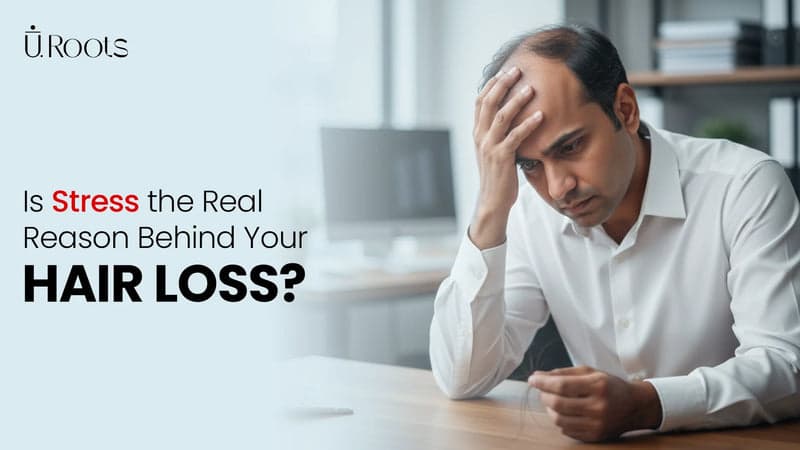
Have you started noticing more hair strands on your pillow, shower drain, or brush lately? While many look for nutritional or hormonal causes, stress is often an overlooked trigger of hair loss. The emotional strain, hectic schedules, restless nights, and daily pressure of modern life not only affect your mood but can also weaken hair follicles and disrupt the natural growth cycle.
At QHT Clinic, some patients have been surprised to discover that their hair falling out is not simply a matter of genetics or nutrition; it is rather caused by stress that is quietly sabotaging their hair. The connection between the two is real, scientific, and more prevalent than you may imagine. In this blog, we will discuss how stress may result in losing hair, the science behind it, what can be done, and when you should seek professional assistance in the treatment of hair fall due to stress.
Understanding The Correlation Between Hair Loss and Stress
Before we dive into it, the big question will be answered first: Can stress lead to hair loss?
Yes, stress may stimulate or aggravate hair loss. However, not every hair fall caused by stress has a similar appearance. Hair loss may occur abruptly, gradually, or in localised areas about the reaction of your body to prolonged stress. Acute stress can cause temporary hair shedding that is usually reversible, whereas chronic stress may lead to long-term follicle damage and persistent hair thinning.
Cortisol and adrenaline are hormones that are released into your body when you are stressed. Such hormones may disturb the normal growth of the hair follicles, cause the follicles to enter a resting stage prematurely and reduce the supply of nutrients to the scalp. This eventually causes the hair to be thinner and shed. According to QHT Clinic doctors, the hair loss caused by stress is normally reversible and short-term only, when the underlying cause has been addressed at an early stage.
The Hair Growth and Stress Science
Hair has a natural life cycle with three stages:
Anagen (Growth Phase): Hair actively growing for 2–6 years.
Catagen (Developing Phase): The growth halts and the follicle becomes smaller.
Telogen (Resting Phase): Existing hair is shedding, which prepares the place for the new strands.
Regardless of how this cycle is interrupted, it can result in the occurrence of telogen effluvium whereby large quantities of hair suddenly enter the resting stage. Then you might notice that you start to lose hair several weeks to months following some stress event. QHT Clinic doctors state that even though stress would not necessarily irreversibly damage follicles, over time or recurring stress, the follicles would be weakened, and therefore recovery would take a longer period.
Different Forms of Stress-Related Hair Loss
Stress and hair loss are associated with three major conditions:
1. Telogen Effluvium
The most common type. Shedding occurs abruptly after a significant stressor such as illness, surgery, a breakup or loss of a job. One may shed out hair in chunks when bathing or brushing. It’s temporary. New growth begins 3–6 months after the stress is relieved.
2. Alopecia Areata
Autoimmune type in which the immune system attacks the follicles on the hair forming small bald spots. The condition can be caused or aggravated by psychological stress.
3. Trichotillomania
A compulsive hair-pulling disorder may be brought about by anxiety or tension. Whenever individuals are stressed, they may start pulling hair out of their scalp, eyebrows or eyelids without even noticing.
Normal Symptoms of Losing Hair Due to Stress
It might not manifest itself immediately, stress hair loss typically manifests several months following the cause. Watch for these signs:
A hairy pillow or comb
More hair on the pillow or comb than usual.
Not localised but all around the scalp.
Thin or fragile strands of hair.
Hair at the hairline grows slowly.
Fatigue,
Insomnia
Loss of appetite
Feeling of worthlessness
Losing more than 100 strands or chunks of hair per day
Increased scalp oiliness or dryness
Itchy or sensitive scalp
Hair feels brittle or breaks easily
Excessive shedding during brushing or washing
Slower hair growth or thinning at the crown or hairline
The doctors at QHT Clinic suggest that it is better to be examined promptly before shedding becomes severe.
The Mechanism Behind Why Stress Triggers Hair Fall: What Happens in the Body?
When you’re under stress, your body shifts focus from growth and repair to survival. Here’s what changes:
Decreased Blood Flow: Stress cuts off the blood supply to non-essential regions of the body such as the scalp and denies follicles oxygen and nutrients.
Hormone Imbalance: The hormone cortisol interferes with the other hormones such as thyroid hormones and androgens and damages follicle health.
Inflammation: Chronic stress increases inflammation, and it destroys the microenvironment of follicles.
Immune Dysregulation: In some disorders, such as alopecia areata, autoimmune responses may be directed toward healthy follicles.
Yes, stress can make people lose their hair, there is a very good biological reason, and this can be reversed, with early changes in lifestyle, proper nutrition and medical treatment.
Who Is Most at Risk?
All people respond in different ways, however, you might be more likely to suffer stress-induced hair fall when you:
Work full-time or do not sleep on schedule.
Experienced illness, surgery or childbirth recently.
Women in the postpartum phase
People recovering from illness (like
COVID)
Suffer from hormonal disturbances such as thyroid issues or PCOS.
Use crash diets, or miss meals frequently.
Family history of stress sensitivity or hair thinning.
Students & professionals under chronic academic/work pressure
The experts of QHT Clinic underline that the initial step of preventing long-term hair damage implies identifying your own risk factors.
How to Differentiate between Stress-Induced Hair Loss and Other Causes
Stress-induced shedding may be confused with other causes of hair loss such as genes and nutrients. The difference is indicated in the pattern:
Hair loss associated with stress causes hair loss throughout the entire scalp and not only in the hairline or common bald areas.
It normally begins 2–3 months after a stressful event.
It tends to resolve itself as soon as the stress is taken care of.
When the hair loss persists past six months, then you will require further medical examination, at QHT Clinic to rule out thyroid complications, iron deficiency, or a combination of other hormonal problems.
Stress-Related Hair Fall Treatment: Medical and Natural Approaches
The good news? The majority of the stress-related cases of hair fall are reversible. Once there is a decrease in stress and you take good care of your scalp, hair starts to grow back again. The best methods of treating it are as follows:
1. Professional scalp check
At QHT Clinic, an in-depth examination and blood tests can help determine whether the primary cause is stress or if it is a lack of vitamins or hormones.
2. Platelet-Rich Plasma (PRP) treatment.
This is a treatment whereby your own blood growth factors are used to help fortify the hair follicles and promote natural growth.
3. Nutritional support
Healthy hair is rebuilt by eating a diet rich in iron, biotin, zinc, and omega-3 fatty acids.
4. Stress‑management therapies
Cortisol levels can be balanced through meditation, yoga, exercise, and sufficient sleep. The density of hair improves in many individuals after a few months of such practices.
5. Medical treatments
Low-level laser therapy, Minoxidil and special serums can be prescribed in the case of chronic stress and baldness.
6. Counselling and mind-body healing.
In case anxiety is the cause of pulling hair or other stressful hair issues, counselling or behaviour therapy can be included in a comprehensive treatment.
Frequently Asked Questions about Stress and Hair Loss
No. Stress hair loss is temporary. When stress is addressed, the majority of people recover normal growth. When not addressed, long-term stress may exacerbate already existing hair problems.
It normally takes 2–3 months following the stressful event. You grow new hair after 3–6 months after you are healed.
The ideal combination at QHT Clinic is a combination of PRP, nutrition, scalp cleaning and stress management. Every plan corresponds to the requirements of the scalp.
Yes. Reduction of cortisol through meditation, yoga and a nutrient-enriched diet is a great step towards recovery.
Yes. Although it may appear to be a temporary action, a scalp check will ensure that it is not a deficiency or a hormone issue that hides underneath the shedding.
If hair shedding persists for more than 2–3 months or worsens despite lifestyle adjustments, consult a specialist early.
Yes, recurrent or prolonged stress can trigger another episode of hair shedding.
Adequate sleep supports hormonal balance and follicle repair, which are essential for healthy hair regrowth.
Conclusion
Stress may be subtle, yet it is a fact of life that can have an impact on your body and most importantly on your hair. The good news? It can be reversed. With early recognition of triggers, living a good life and choosing the correct treatment, it is possible to restore hair and self-confidence. QHT Clinic considers hair loss to be a complex issue: treatment, diet, and stress relief work together to achieve long-term outcomes. Keep in mind that your scalp and your brain are in coordination. Your hair will thank you for it. Book an appointment at QHT Clinic today and start your personalised recovery journey, because healthy hair begins with a calm mind.
Know Your Hair Fall Before It Worsens
Identify early hairfall signs with personalised expert-backed recovery guidance.
Back to blog { "@context": "https://schema.org", "@type": "MedicalWebPage", "@id": "https://theuroots.com/blogs/news/stress-and-hair-loss-treatment-theuroots#webpage", "url": "https://theuroots.com/blogs/news/stress-and-hair-loss-treatment-theuroots", "name": "Is Stress the Real Reason Behind Your Hair Loss?", "description": "Have you started noticing more hair strands on your pillow, shower drain, or brush lately? While many look for nutritional or hormonal causes, stress is often an overlooked trigger of...", "isPartOf": { "@type": "WebSite", "@id": "https://theuroots.com#website", "name": "TheUroots", "url": "https://theuroots.com" }, "reviewedBy": { "@type": "Person", "name": "Dr. Ajay, MBBS, QHT Clinic", "jobTitle": "Medical Reviewer", "affiliation": { "@type": "MedicalOrganization", "name": "QHT Clinic", "url": "https://qhtclinic.com/" } }, "author": { "@type": "Organization", "name": "URoots Editorial Team" }, "datePublished": "2025-12-06T18:21:04+0530", "dateModified": "2025-12-06T18:21:07+0530" } Browse
Related Blogs
Discover reliable, doctor-written health resources online for accurate guidance, trusted information, and better informed medical decisions.
15th May 2026 Hair Loss Treatments Compared: Which Option Is Right for You? Hair loss is a very prevalent condition that...
15th May 2026 Hair Loss In Women: Causes, Treatment and What Actually Works Hair loss in women is no longer occasional;...
15th May 2026 How Long Does It Take to See Results from Minoxidil You have started using minoxidil and are staring...
15th May 2026 Hair Loss Myths Busted: 10 Things You Should Stop Believing If you are experiencing hair loss, you have...
Book Your Consultation
We're always here for hair help.
Shop
Hair Test
Contact
Our Story & Philosophy
Experts Panel
Blogs
Khasara No. 1395/684/2, Crown Complex, NH-8, Exit No. 12, Near Hero Honda Chowk, Gurugram,
+916399110555
care@theuroots.com
Grievance Officer: Mr. Sumit QHT Email: grievance@theuroots.com
Privacy Policy
Payment Terms & Conditions
Cancellation / Refund Policy
Terms & Conditions
Shipping Policy
URoots Hair Serum
URoots Max Cyclical Therapy
URoots Hair Supplement
URoots Daily Hydrating Shampoo
URoots Finasil Tablets
URoots Minoxidil 5% Solution
Uroots Minoxidil 5F+ Daily Scalp
© 2026 QHT Mediways. All Rights Reserved
Choosing a selection results in a full page refresh.
Opens in a new window.
URoots Hair Care Expert × Hi! Welcome to URoots. Before we begin, please share your name and phone number so our team can follow up with you.
✅ Thank You, ! Your responses have been recorded.
Our hair care experts at URoots will review your details and get in touch with you shortly on to guide you on the best path forward.
Typically, our team responds within 24 working hours. We look forward to being part of your hair care journey!
This article is general information, not a diagnosis. Hair loss has several causes and the right treatment depends on yours.
Talk to a doctor